5 ideas for growing food and strengthening local food systems
- Features
1. Support farm-to-community produce access
by shopping at a local farmers’ market, joining a CSA, or even starting your own container garden and sharing your harvest with your neighbors. Farmers markets and CSAs allow you to invest in the farmers working in your community and to reap the benefits of their fresher, seasonal produce (which is often more nutrient-dense and less likely to be contaminated than conventional produce). If you want to try your hand at growing food of your own, you likely need less space than you think to get started—many vegetables can be grown in containers in small city backyards and on balconies. 💡 Keep an eye out for our Seed to Supper classes in the spring where you’ll get hands-on container gardening lessons from our farm team & Penn State Master Gardeners
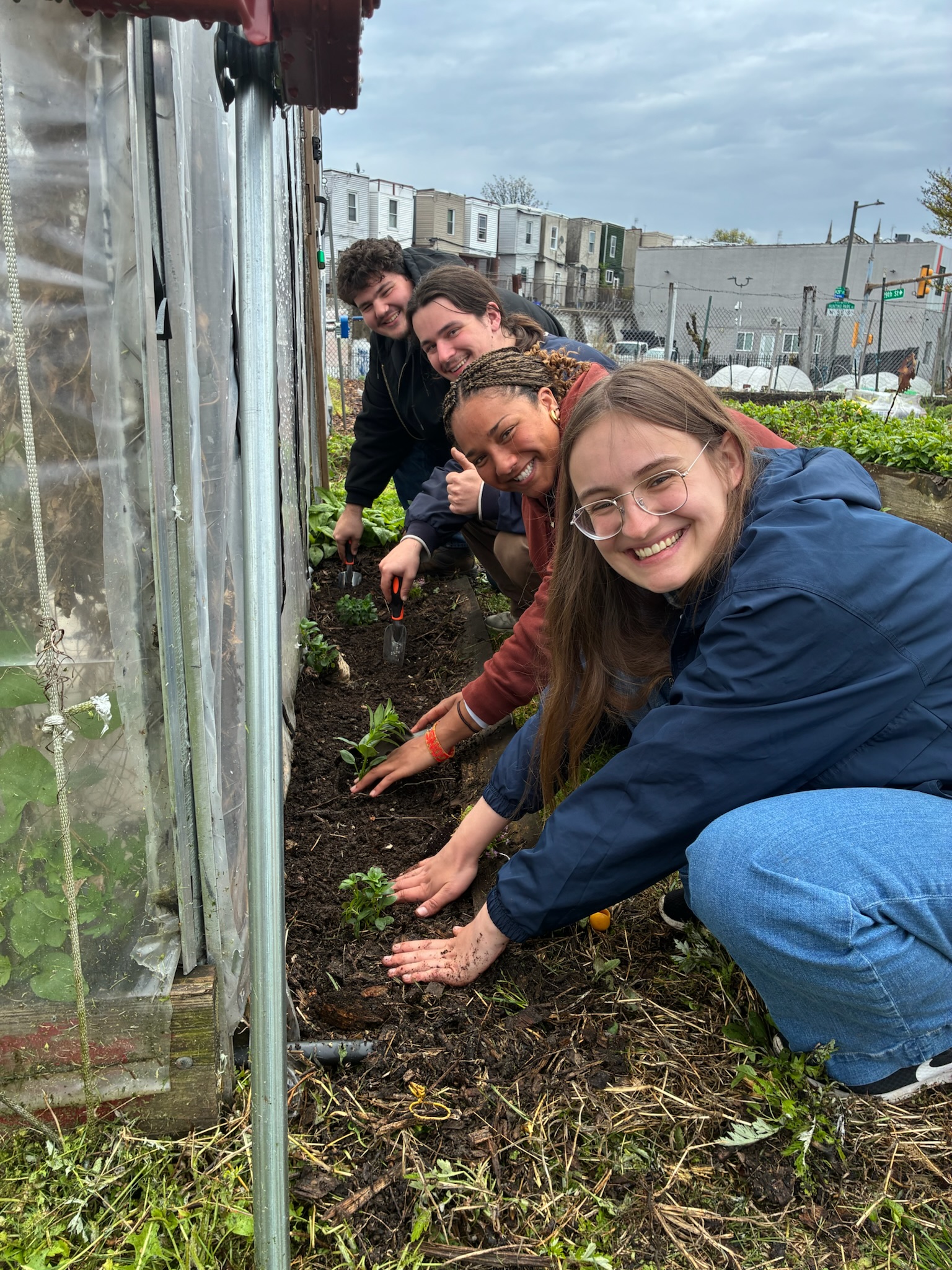
2. Volunteer at Share’s Nice Roots Farm!
Share’s quarter-acre, fully organic farm in Allegheny West hosts Community Farming Days during the growing season (March – December). No farming experience is required to join us from 9-12am on these Saturday mornings—Farmer Ellie Kaplan & team will show you everything you need to know to help with the day’s tasks.
3. Learn what produce is in season and cook with it
Some great places to start: Phully Rooted: A Guide to Eating Seasonally and Locally in Philadelphia and seasonalfoodguide.org
4. Start composting at home, at work or in your community
Composting your food scraps instead of throwing them away means you’re producing many fewer carbon emissions over your lifetime, plus contributing to richer soil and less smelly trash! Composting in Philly has never been more accessible with services like Bennett Compost (they’ll pick up compost directly from your home or work weekly) and the Community Compost Network of drop-off sites around the city. Pro tip to get started: keep a brown paper bag in your freezer to fill with food scraps like banana peels, coffee grounds and more—a brown bag of frozen food scraps won’t attract pests, is much easier to transport to your nearest compost pile, and the bag itself is compostable too!
5. Get involved with your local community gardens and urban farms